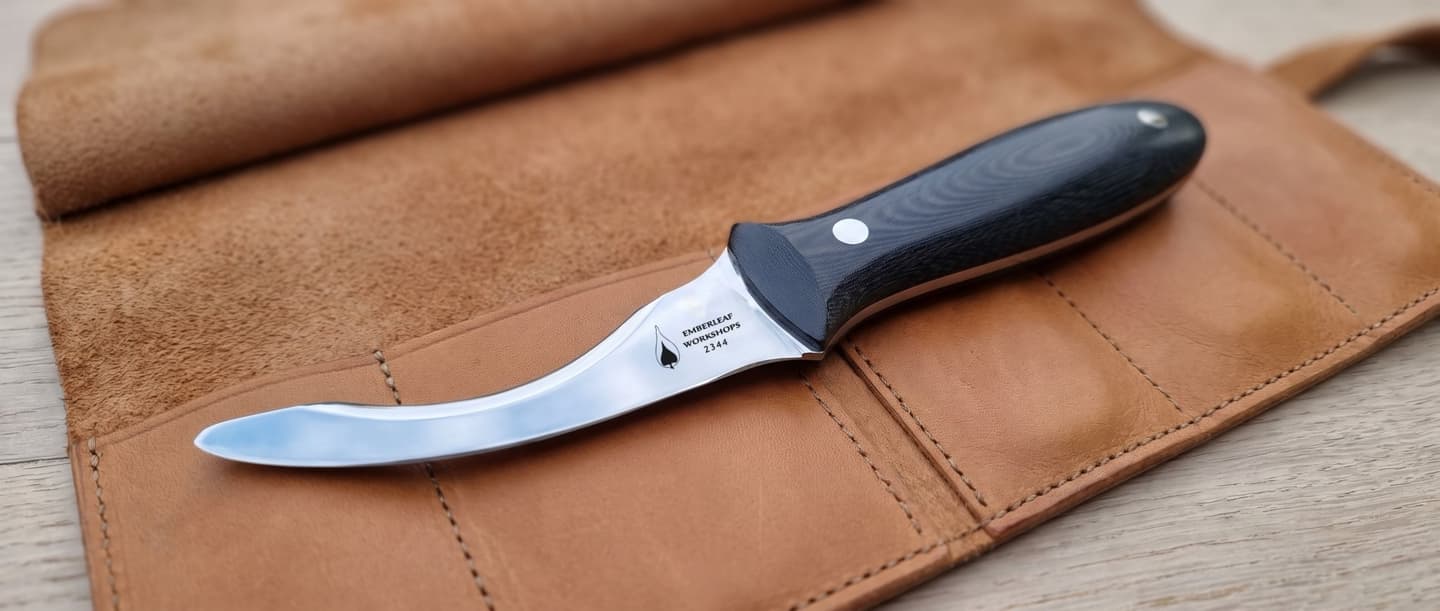
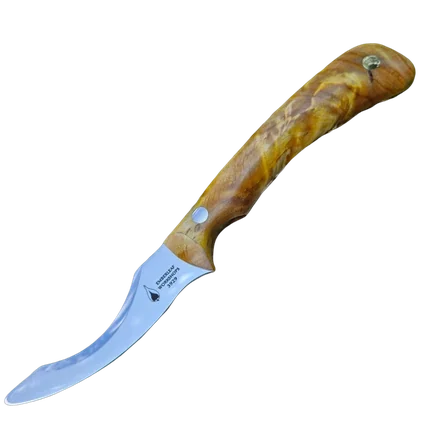
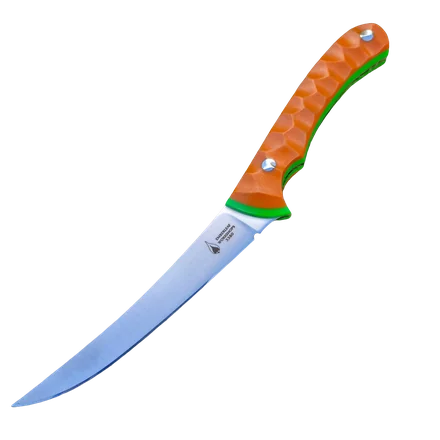
The Artemis is the specialist’s specialist — a knife designed for one job, done perfectly: opening game cleanly, the way a zipper opens a coat.
The unzipping knife
It was originally drawn as a companion to a Cael or Garron, handling the delicate first stage of the gralloch. The short blade opens gut and hide with precision — without cutting hair, without damaging the hide, and with a deliberately blunt tip that will not puncture what must not be punctured. The meat stays clean; the skin stays whole; the animal is treated with the respect good fieldcraft demands.
One knife, many grips
The handle is reversible, offering a wide array of holds so the knife can be drawn across a carcass at whatever angle the work demands — palm up, palm down, drawn toward or away. It is a strange-looking tool until you use it once, after which the strangeness reads as inevitability. Guests who borrow one on a stalk tend to commission their own within the month.
Why it matters
A clean unzip protects the hide for the taxidermist or tanner, keeps hair off the meat, and turns the most delicate stage of processing into a routine one. For deer managers handling volume, that reliability compounds into hours saved over a season.
Commissioned as a pair
Most Artemis owners pair it with a larger blade from the range; commissioned together, the two can share materials and sheath work — one handle wood, one number sequence, one matched set on the belt.
The steel is yours to choose
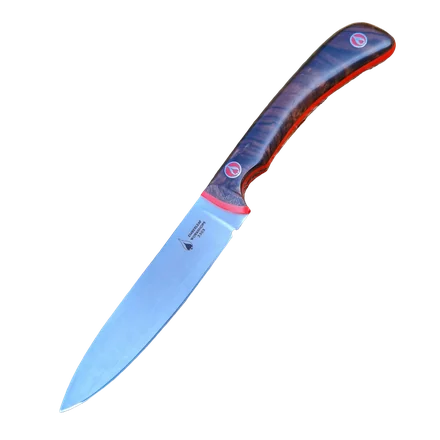
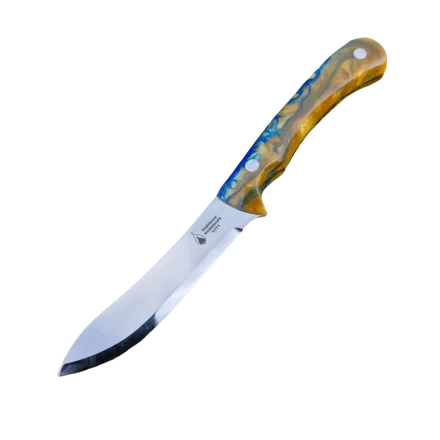
Most Artemiss leave the bench in one of our working stainless steels: RWL-34, a high-chromium stainless with excellent edge retention and corrosion resistance; PMC27, a powder-metallurgy steel with a fine grain that takes a keen edge and asks very little maintenance; or AEB-L, the razor-blade stainless whose fine carbides give a very keen edge with good toughness. Traditionalists can have O1 tool steel — a carbon steel that sharpens to an exceptionally fine edge and rewards a little oil and attention.
For something quietly spectacular, we pattern-weld our own stainless Damascus in-house from RWL-34 and PMC27 — Vinland, Gysinge, Ladder, Odin’s Eye, Thor and a dozen other patterns, each combining high corrosion resistance with exceptional edge retention. On a Artemis, Damascus turns a working tool into an heirloom without costing it a day’s work.
The sheath is part of the knife
Every sheath is handmade in-house and moulded to the individual knife it will carry — not to the pattern, to the knife. Leather comes in classic black or brown, or a custom colour; hand-tooled work is available, up to and including engraved silver panels. For those who work in all weathers, Kydex is offered on our hybrid leather carry system.
Numbered, recorded, guaranteed
Every Artemis is numbered and entered in the workshop ledger — steel, handle, date, owner — and carries a lifetime warranty against manufacturing defects. It arrives sharpened and papered, sent signed-for and insured. Decades from now, the number on the blade will still tell its story.
Commissions start with a conversation, or with a design: the design tool lets you set out the steel, handle, pins, engraving and sheath, and send the draft straight to the bench.
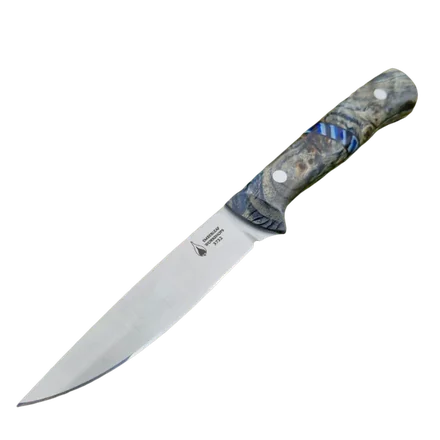 Garron v2Hunting knife, 4.5in blade
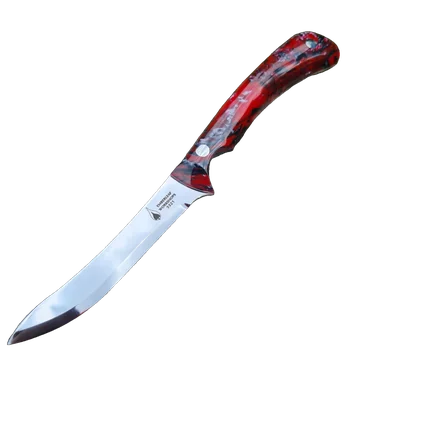 Cael AR v2Hunting knife, 4in blade
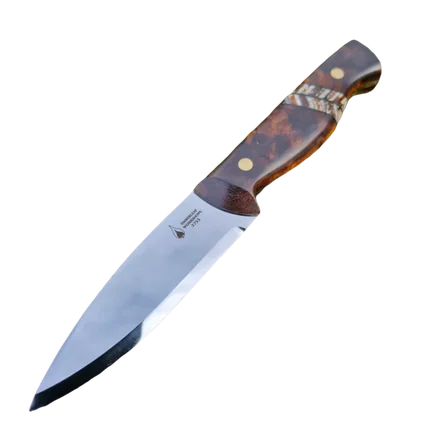 Bran v1Bushcraft knife, 4in blade
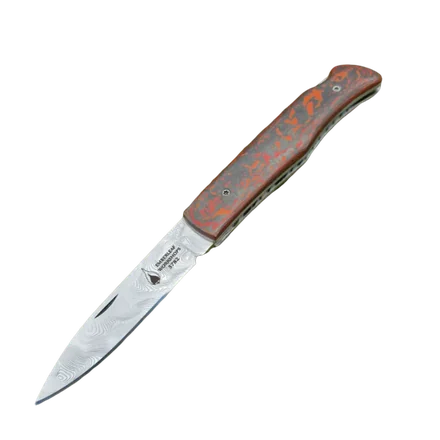 AquilaFolding knife, under 3in
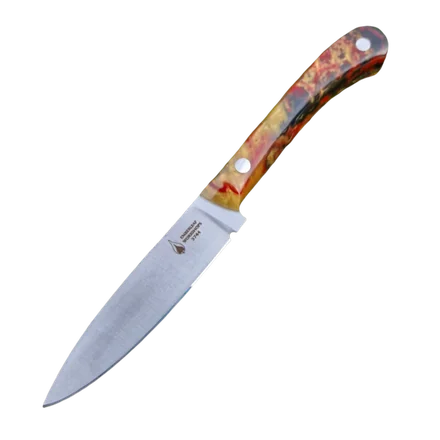 Ventari v2Hunting knife, 4in blade
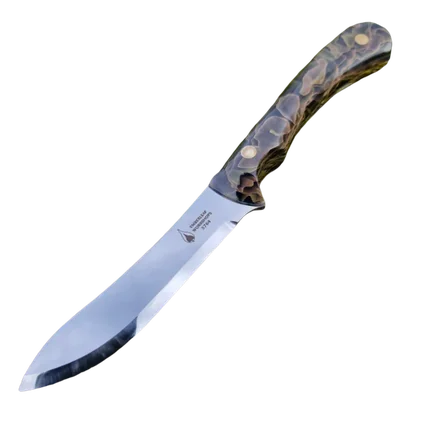 Peryton v1Hunting knife, 4in blade
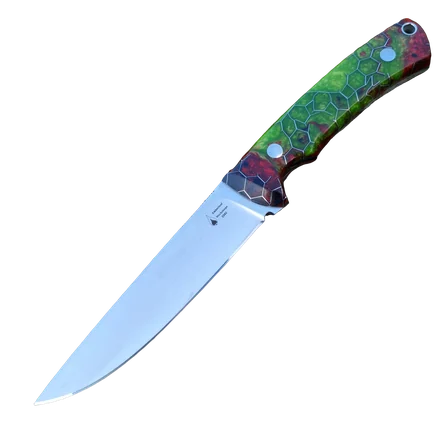 HarrierHunting knife, 6in blade
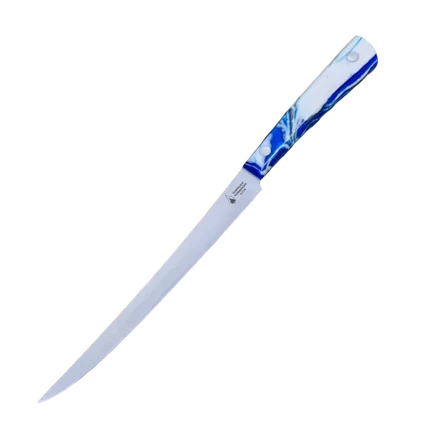 Maturin v1Hunting knife, 7in flexible
 Cuttello v1Chef knife, 5in blade